Judy Collins: Grace Notes on Growing Older
American folk legend Judy Collins has no intention of slowing down. Sixty years have passed since the singer-songwriter rose to fame in the ’60s Greenwich Village coffeehouses alongside Bob Dylan, Pete Seeger, and Joan Baez. Since then, the two-time Grammy Award winner, known worldwide for her rendition of “Both Sides Now,” has recorded 55 albums and written 11 books, including a recently published compilation of poetry. Now 86, she is still performing across the United States and abroad and will wrap up a year-long tour in March after 80 performances. But while her clear, lovely voice still radiates serenity, she has faced more illness, pain, and loss than many realize. Her toughest challenge came this past December, when her husband, Louis Nelson, 88, died suddenly. The couple had spent nearly 50 years together. Collins recently spoke with Rona Cherry about drawing on spirituality, community, and integrative wellness practices to navigate grief and aging.
Rona Cherry: My condolences on your husband’s passing. I understand he died only 12 days after being diagnosed with cancer.
Judy Collins: Yes, it was a shock, pure shock. And I’m still in shock. He was diagnosed with a massive cancerous tumor in his chest, even though Louis and I were both very on top of immunizations and checkups with physicians.
RC: You must have been stunned to hear that news so suddenly.
JC: Can you imagine walking into a hospital and being told your lifelong partner has two weeks to live? I spoke to one doctor who I’ve known for 65 years and asked her how this massive cancer had not been discovered earlier, even though Louis had gone to many doctors over the course of many years.
RC: Did Louis have any signs that something was wrong?
JC: He was treated for three or four years for heart issues, but the cancer was undetected during that time. A lot depends on whether you can get your doctor to perform like the old family physician who took the whole body into account, rather than today’s specialists who focus only on one specific body part. There’s a specialist for this, a specialist for that …
RC: It’s heartbreaking to think something so serious could go undetected for so long. It also raises questions about how older patients are treated in our healthcare system. I’ve heard that ageism is a systemic problem. In fact, according to University of Michigan Health and Retirement Study data, about 20 percent of people—even as young as 50—experience age-based discrimination in healthcare.
JC: Ageism is a very real, long-term issue that needs to be addressed. We’ve got to talk about ageism and all the places that it’s encountered. People over 50, 60, and 70 have to be thinking about this when they approach their medical teams. Too often a person 75 or older does not receive a necessary procedure.
RC: How are you coping with Louis’ loss day to day?
JC: It’s a drag. It’s hard. But loss is part of everyone’s life. It happens. I don’t think that people learn about certain kinds of things in life unless they experience loss. We learn as we go along, mostly from others who have gone through the same thing.
RC: Meaning?
JC: I’m 86 now, and I am surrounded by women who have lost their husbands. So many women lose their husbands because women live longer than guys do. That’s just a fact. It’s important to have friends with whom you can talk about what’s going on in your life. I have a very full social life.
RC: Do you feel Louis’ presence in any way?
JC: I certainly feel Louis’ presence. All the time and all around me. I’ve started to scatter his ashes in various places, and it seems to help. I see birds flying and I think of him. I’ve also seen more helicopters … he was a helicopter pilot.
“Music is a fundamental part of my existence … The things that count to most of us are not things we can touch, and they’re often things we can’t even describe. I was given music so that I could get through life.”
RC: Was it difficult to stand on stage again so soon after he passed?
JC: I went back to work two to three days later. At my concerts, I sing songs, talk a little, and I mention that I lost my husband. We share stories, and I tell the audience that tonight they have become my grief group because everybody has something that they grieve or have suffered. Everyone has something that has broken their heart. My audience has always been my teachers. Whatever I do, I have some connection with my audience.
RC: Losing your husband is one of the many challenges you’ve had in your life—a suicide attempt at 14, polio, tuberculosis, hepatitis, years of drug abuse and alcoholism [Collins has been sober for 47 years], a decade-long battle with bulimia, severe bouts of depression and panic attacks, and the loss of your only son, Clark, who died by suicide in 1992 when he was 33 years old.
JC: When my son died, I really didn’t know if I would make it. It was devastating to me. I thought my life was finished, and I was getting ready to put my career on hold and cancel all my scheduled performances.
RC: What stopped you?
JC: I got a call from Joan Rivers—whose husband had committed suicide a few years before. She said, “I know you want to quit, but you can’t stop working, because if you do you aren’t going to heal.” I took her words to heart. Therapy, meditation, writing, and having the support of family and compassionate friends all helped me. Friends keep us on the planet.
RC: In your latest book, Sometimes It’s Heaven, your first book of poetry, you write about getting a tattoo of your son’s name and a bluebird on your wrist. You mention possibly getting more tattoos “as another way to survive his death.” It seems you’ve drawn on many sources of strength—internal and external—to cope with loss. One of them, you’ve said, is your “eclectic spirituality.” What does that mean to you?
JC: I draw from a variety of spiritual practices and traditions. I pray a lot. I read a lot of spiritual books and I’m always learning. I’m fascinated with Eastern religions, particularly Buddhism. There are a number of Buddhas from around the world in my home—and a Saint Francis too.
Over the years, I’ve met a lot of gurus, including the Maharishi and Krishnamurti, and I use the wisdom of all the gurus I can think of. I also maintain a connection to my Christian roots—I was originally raised as a Methodist—and go to church. I love the music. I love the ceremonies.
RC: You also belong to Self-Realization Fellowship (SRF), yes? You’ve said you were introduced to it when you were in your forties.
JC: I had started meditating in my twenties and also went to yoga classes in New York. I learned about SRF through my piano teacher, Antonia Brico, who was the first woman to conduct the New York Philharmonic and was also a conductor with the Berlin Philharmonic. She told me about Paramahansa Yogananda, who founded SRF more than 100 years ago. He wrote the spiritual classic Autobiography of a Yogi.
RC: Did you begin practicing his form of meditation soon after?
JC: Yes. It works for me. It’s a meditation form that includes deep breathing and yoga to achieve spiritual harmony. We pray to a number of deities. And then we say, “All saints and all gurus from all religions.” We’re asking for help wherever we can get it.
RC: In one of our previous interviews, you said, “Meditation provides the emotional stability I really need.”
JC: I think life in general involves a lot of meditation of some kind, whether you like a formal kind of meditation or something like walking by a river. I meditate each day, even when I’m on the road. I meditate in any place I find myself. I can do it in a car. I can do it on a plane. I don’t have to be perfect about it. It calms me and helps me focus.
RC: In addition to SRF, you’ve also spoken about your connection to the late Zen master Thích Nhất Hạnh, whose teachings on peace and mindfulness have touched millions. What drew you to his message?
JC: I am drawn to his message of inner peace and compassion. It’s very simple and powerful.
RC: When did you first meet him?
JC: The first time I got to meet him was when he came all the way here from France for the 9/11 World Trade Center recovery. He spoke at Riverside Church in New York.
RC: How important is silence or solitude in your spiritual practice right now? Is solitude too difficult for you, especially after losing your husband?
JC: No, solitude is something that gives me tranquility. I think silence leads us to an understanding of our presence in our place in the universe, which is such a mystery to us at many times.
RC: In Sometimes It’s Heaven, you write: “When I sing, I go to those places that I am unable to find in real life.” Can you elaborate?
JC: Music, whether I’m performing or listening to it, has helped me navigate struggles in my life. It keeps me going. Music is a fundamental part of my existence. It’s like a fourth dimension that allows for deep spiritual and emotional experiences. I’ve said in the past that the things that count to most of us are not things we can touch, and they’re often things we can’t even describe. I was given music so that I could get through life. Music, singing, and art have helped me survive the hardest things that have happened to me.
RC: Is there a particular song you feel closest to right now?
JC: “Amazing Grace” has always meant a lot to me. My grandmother used to sing it to me when I was little. The hymn is hundreds of years old and was written by John Newton, a man who had been a slave trader. He experienced a spiritual transformation after his ship wrecked and he was saved. He changed his life, became a man of faith, and later an abolitionist. It’s a song of transcendence—no matter what religion you follow, what gender you are, or what beliefs you hold. It’s been a source of strength and comfort through some of the darkest times in my life. It helped sustain my sobriety when my son died.
RC: How else do you practice self-care? I remember you saying that after your son died you had a massage every day. “The massage helped me get back into my body and out of my grieving head,” you wrote.
JC: I still have regular massages—a couple of times a month. People come to the house.
RC: Beyond massage, what else are you doing to keep your immune system strong? I know you’ve been an avid exerciser. Over the years you’ve tried all different types of exercise ranging from the Royal Canadian Air Force exercises to yoga, aerobics, and swimming. Are you still keeping up your exercise routine?
JC: I have to keep my energy up. I have to exercise, and I love to walk. I have a Fitbit and I try to do 10,000 steps outdoors every day. But I also do my walks with weights, usually seven to eight pounds, to prevent bone loss. I have had an increase in my bone mass. I now have osteopenia rather than osteoporosis.
RC: I remember at one point you took 46 vitamins and supplements a day, divided into morning and evening batches. Is that still the case?
JC: (laughs) My ingestion of various vitamins has slightly shifted. The number of supplements is much leaner today. Although I don’t do quite as many, I am doing things that I think help me more. I still stick with vitamin B-complex, vitamin D3, and a lot of vitamin C. But I’ve also begun in the past 20 years to use more Boiron homeopathic products—they help with sleep, coughing, and almost any other problem. I recommend a book called The Family Guide to Homeopathy by Dr. Andrew Lockie [M.B., Ch.B.].
RC: You mention several homeopathic remedies—which do you rely on most?
JC: My home is filled with all sorts of things. You name it, I’ve got it. [Sorting through a drawer filled with the products] I take 30c of silicea, drosera, aconite, phosphorus, gelsemium, arnica, chamomile, ignatia, and others. I’ve probably used all of the products here at one time or another.
RC: With your tour ending this March, what’s next for you—and how do you see your purpose evolving now?
JC: I will tour as long as I’m able. I love it. It gives me pleasure. It gives me hell. It takes care of all kinds of worries that I usually have. If I didn’t work, I don’t know what I would do. I’m always going to be working or writing or singing or composing or creating a new book about something or other.
RC: So you see growing older as an opportunity for growth, creativity, and fulfillment?
JC: Absolutely. I believe it’s wrong to think of age as an impediment. Age is just a number. I’m telling you that 86 is the new 27!
Judy Collins is a legendary folk singer who is celebrated for her poetic originals and imaginative interpretations of folk standards, including Joni Mitchell’s “Both Sides Now” and Stephen Sondheim’s “Send in the Clowns.” An activist for mental health, suicide prevention, and social justice, she continues to write, tour, and inspire audiences worldwide. Her books include The Seven T’s: Finding Hope and Healing in the Wake of Tragedy and Sometimes It’s Heaven: Poems of Love, Loss, and Redemption. In May of this past year, Collins was honored by the Cathedral of Saint John the Divine in New York City, the Episcopal cathedral where she and her late husband were married and where she’s served as an artist-in-residence for more than 40 years. Visit judycollins.com
This article appeared in the January/February 2026 issue of Spirituality & Health®: A Unity Publication. Subscribe now.
About the Author
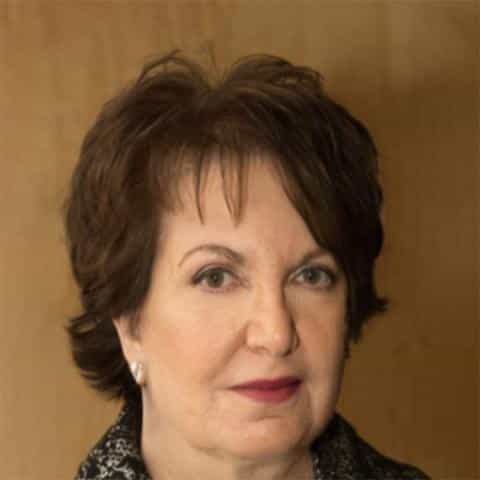
Rona Cherry is a writer, editor, and ordained interfaith minister whose work has appeared in Spirituality & Health: A Unity Publication, The New York Times, Vegetarian Times, Ladies’ Home Journal, MedShadow Foundation, and others. She was editor in chief of several national magazines, including Fitness and Longevity, and was executive editor of Glamour. Cherry has also worked with several nonprofits, including the National Ovarian Cancer Coalition, Global Lyme Alliance, and Campaign for Female Education.
More
 Article
Good Questions: Praising God and Life After Death
Rev. Thomas W. Shepherd answers reader questions about praising God and life after death.
 Article
Sonia Choquette on Trusting Your Vibes
Sonia Choquette explains how intuition—once dismissed as superstition—is now essential amid global shifts. Learn to tune into your inner GPS and live aligned.
 Article
Prosperity Resources
Explore Unity prosperity teachings with articles, meditations, booklets, and books. Unlock spiritual and practical tools for an abundant life.
 Article
From Seeker to Finder
Awakening is closer than you think. End the inner chatter, embrace present-moment peace and deep okayness.