Unity or Unitarian Universalist?
What are the differences (and similarities) between Unity and UU?
Have you ever said “Unity” to someone only to have them ask, “You mean, Unitarian?”
“No. Unity,” you repeat.
Inevitably the response is “What’s the difference?”
The responses offered here are intended to provide some helpful answers to that question—without a full treatise on church history in America.
Unitarian Universalism (UU), like Unity, is noncreedal. Both faiths affirm freedom of the individual’s belief.
Both are known for welcoming those who have felt excluded or even exiled from traditional, sometimes rigid, religions.
Both faiths were founded on Christian beliefs and have since expanded those teachings.
Both follow a guiding set of principles—Unity teaches five ancient spiritual principles and UU has seven principles.
Both believe humans are good and reject the notion of “original sin.”
Both believe humans can be whatever they want to be—they create their own heaven (or hell) on earth.
Both believe in the creative power of the human mind, whether through reason or divine power.
So how do they differ? The idea of a divine presence is not only important in Unity teachings—it is its foundation, the first principle. God is All.
The Truth of the Christ presence everywhere, in each of us, is the basis for all Unity teachings.
UU principles do not mention God. Why?
Unity describes God as a creative force operating in, through, and as each of us … UUs have moved away from their Christian origins to a more liberal acceptance of pluralism of beliefs.
Unity vs. UU: What Do They Believe?
Unitarian Universalism was originally two denominations that merged in 1961. Historically, their tenets of shared belief were that God is one and salvation is universal. They rejected ideas of the Trinity and eternal damnation.
However, even though both Unitarian and Universalist faiths started with liberal Christian views of Jesus and human nature, since the merger they have moved toward “a rich pluralism that includes theist and atheist, agnostic and humanist, pagan, Christian, Jew, and Buddhist.”
GOD
Some UUs believe in God, some do not. Theologians continue to see the idea of the sacred or Divine used in modern UU because “it offers a vision of the highest values of truth, justice, love, and goodness toward which we strive.”
This is reflected in the UU principles, such as a free and responsible search for truth and meaning, a world community with peace and justice for all, and respect for the interdependent web of life.
Unity describes God as a creative force operating in, through, and as each of us. Our work as humans is to integrate our divine nature with our human experience.
TRINITY
Uni means “one.” As noted above, UUs have moved away from their Christian origins to a more liberal acceptance of pluralism of beliefs within congregations. For UUs, belief in the Trinity would be an individual affair.
Unity teaches one power and presence but also utilizes the Trinity—a metaphysical trinity of mind, idea, and expression—also sometimes called spirit, soul, and body. As for Father, Son, and Holy Spirit—yes, all are divine, but so are everything and everyone else in the universe. It’s all God or One.
JESUS
UUs tend to reject the idea of Jesus as “son of God,” a savior sent to overcome original sin. Some choose to see him as a “moral exemplar” while others a prophet, a reformer, or a dissident. With its Judeo-Christian roots, however, Jesus continues to have a role in UU church messaging.
Unity would say Jesus is divine and so are you. Jesus was showing what is possible for human beings as expressions of God. He was a great teacher, and the spiritual use of our minds was one of his lessons. Our creative power begins in Spirit and is utilized in thought.
GOOD
Those Unitarian Universalists who believe in a God-creator believe the Divine is benevolent. This can be observed by seeing the order and harmony in the universe, all for our good. Humans glimpse God through the works of creation.
The first principle taught in Unity is that God is Absolute Good. We live and move and have our being within the energy called God. We can know intimately our oneness with All That Is.
Both faiths were founded on Christian beliefs and have since expanded those teachings ... Both are known for welcoming those who have felt excluded or even exiled from traditional, sometimes rigid, religions.
Unity or UU? Metaphysics and Reason
KNOWLEDGE
The UU merger was based on an idea that all knowledge comes through the five senses. We learn and know through reason. Unitarian Universalism exalts human reason and moved the center of authority from the church body to individuals.
Unity insists that human beings can know without physical evidence, and particularly, we can know the Divine without proof or demonstration. Early Unity leaders exhorted us to put down the books, take a break from teachers, and spend time in the Silence to seek direct knowing of the Divine.
SCRIPTURE
Unitarian Universalists would say sacred texts, including the Bible, are best understood when subjected to reason. If something in the Bible doesn’t satisfy your reason, it doesn’t have to be accepted. Unitarian Universalists expand their knowledge base to religious texts from the world’s faiths to reveal a holistic picture.
Unity would say that we read the Bible intuitively rather than analytically. If something doesn’t speak to you, it can be left behind. But it can also be reinterpreted metaphysically, which adds a new layer of meaning to biblical passages that we know cannot be literally true.
Historical Differences and Connections
Both Unitarianism and Universalism predate Unity. Unitarianism first surfaced in the 1600s in the wake of the Protestant Reformation in Europe and was established as a denomination in the early 1800s. Universalism developed in the United States in the mid-1700s. Famous UUs include Presidents John Adams and John Quincy Adams, Red Cross founder Clara Barton, author Mary Wollstonecraft, social reformer Dorothea Dix, and musician Pete Seeger.
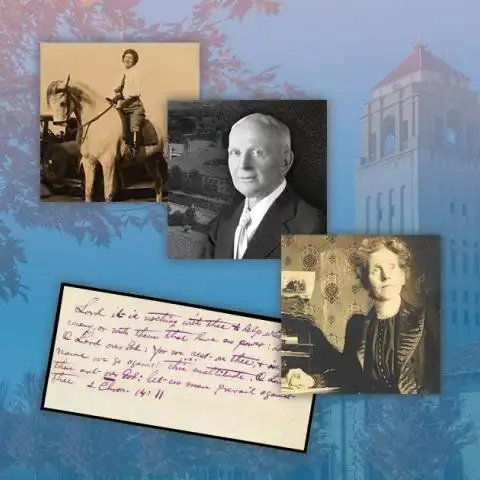
Unity was founded in Missouri and grew out of the American Transcendentalist movement of the mid‐1800s, which specifically refuted Unitarian rationalism. Transcendentalists believed the ideal state for humans is spiritual and transcends the physical or empirical.
Such a state (or consciousness) is realized through intuition or gnosis, knowledge of spiritual truth. Some early Transcendentalists such as Ralph Waldo Emerson began as Christian Unitarians. Well-known people later affiliated with Unity included Maya Angelou, Betty White, author Victoria Moran, and Lucie Arnaz.

Summer Sale! Save 50%

Make a statement with every morning brew.
More
 Article
Where to Start with Butterworth
Rev. Ellen Debenport gives an overview of Eric Butterworth and provides suggestions for which of his books to start with.
 Article
Finding the Five Unity Principles in Buddhism
Unity teachings are based on universal spiritual principles drawn from the world’s major faiths. In this adapted excerpt from Unity and World Religions, author Paul John Roach explores how we can find the Unity principles in Buddhism.
 Article
Interested in Unity? What to Read First
Are you new to Unity or interested in learning more? Unity began as a publishing house, so naturally we have
 Article
Five Spiritual Principles Taught by Unity
Discover timeless wisdom in the Five Principles taught by Unity. Learn to live abundantly and align with your divine nature.