Bright Lights: Reggie Hubbard Weaves Yoga and Sound into Activism and Change Masculinity
“I bring peace to those who are on fire, and for those who are asleep, I bring them some fire.”
Reggie Hubbard spent years navigating the intense demands of political strategy in Washington, D.C., organizing on behalf of causes he believed in while pushing his body and spirit to the edge. What began as burnout eventually led to a breakthrough—not only in his career, but also in his relationship with himself.
Now a certified yoga and meditation teacher, sound practitioner, and founder of Active Peace Yoga, Hubbard shares the tools that once helped him survive stress, grief, and imbalance. His work bridges the worlds of wellness and activism, bringing mindfulness into civic life—and calling the wellness world into deeper social awareness.
Whether leading sound meditations or teaching yoga, Hubbard offers more than calm; he offers truth, presence, and “the gift of radical permission to feel.”
“I bring peace to those who are on fire,” he says, “and for those who are asleep, I bring them some fire.”
Finding His Practice
In 2014, Hubbard was searching for grounding. After being passed over for two high-profile political jobs, he entered what he describes as a dark night of the soul.
“I was a trilingual Ivy League graduate who had paid his dues in the campaign infrastructure,” he says. “I thought I was about to cash in all those chips, and instead I didn’t get either job.”
But instead of spiraling, Hubbard created a new life approach, thinking, I’m only going to do things that I’ve never done before, that lower my blood pressure, and that are creative. That’s how this six-foot-two, 280-pound man landed in a yoga class.
When Hubbard later moved to Colorado for a new job, yoga quickly became his anchor. “Luckily I had done yoga in the 90 days prior,” he says, “so when the people I worked with turned from friends to foes, I had that muscle memory to turn to this new practice to help me navigate heartbreak.”
The experience tested him but also pulled him inward, strengthening his connection to the practice and equipping him with tools, language, and a deeper sense of presence. Ten months in, the job ended abruptly with a text message. When his former employer requested an exit interview, he declined, offering them something else instead: gratitude.
“I said, ‘I want to thank you, though, for how poorly you treated me because you gave me the wisdom to navigate adversity with grace,’” Hubbard recalls. Later, struck by the calm that had replaced his old reactions, he picked up the phone. He called his mother and said, “Wow, this yoga stuff actually works.”
Early Roots and Inner Fire
Hubbard grew up in Anne Arundel County, Maryland, as what he calls a “smart Black kid” in a working-class family grounded in faith. His parents, whom he describes as beautiful and hardworking, raised him with strong values, a deep sense of community, and a faith rooted in a Baptist church with a powerful legacy. “The church I grew up in was founded by formerly enslaved people,” he says. “So when I talk about liberation, that’s not just a concept for me. It’s lineage.”
From an early age, Hubbard had a strong sense of justice and a voice he wasn’t afraid to use. “I’ve always had the gift of expression,” he says. “Even when I was young, I was speaking out about what was fair and unfair.”
His outspokenness wasn’t always welcome. In mostly white educational spaces, he often felt the need to overachieve just to be accepted. “Being both smart and Black wasn’t something people expected,” he says. “I felt like I had to prove myself again and again.”
That tension showed up in high school too. When Hubbard asked his guidance counselor how to apply to Ivy League schools, she steered him toward community college instead. “She said, ‘Statistically speaking, people like you don’t go to places like that,’” he recalls. “I was like, ‘Excuse me?’”
He proved her wrong. At Yale, he majored in philosophy, a discipline that helped him make sense of early adversity and injustice. He later earned an M.B.A. in international strategy from the Vlerick Business School in Belgium.
“I’ve always been on a path of personal integration,” he says. “Taking all the parts of myself—intellectual, spiritual, emotional—and bringing them together.”
Those early experiences laid the foundation for the work he does now: blending intellect with insight, politics with practice, and healing with truth-telling.
Learning to Walk
By the time Hubbard turned 49, his life looked like it was in full bloom. He was leading meditations, teaching yoga, sharing sound, and living in alignment with his mission—until everything changed on April 1, 2024.
“I looked at my leg, thinking it should be moving, and it wasn’t moving,” he recalls. “I knew I was having a stroke.”
At the ER, his blood pressure spiked to 265/160. The doctor looked at his numbers and his eyes grew wide. “This guy sees death all the time and he’s looking at me with big eyes,” Hubbard says. “I knew something serious was going on.”
Hubbard knew what he needed. He asked his partner to bring his singing bowls to the hospital. “I knew what I was heading into was major, and I needed to be calm. I started playing this bowl,” he says, holding up a medium-size brass bowl. “It’s 350 years old. I don’t know how long I played it for, but I played it.” The sound grounded him and became a medicine. Four days later, he was released from the hospital. His doctors were shocked.
“My neurologist said, ‘Everyone gets medication and physical therapy, but not everyone plays sound for hours. Not everyone is meditating,’” he remembers.
Hubbard, now 51, gradually returned to his teaching and sound work, carrying with him a deeper connection to his own practice and purpose. It also changed his hearing.
“I can hear rainbows,” he says. “I’ll hear super high frequencies and go outside and there will be a rainbow.”
Sound and Stillness
Today, Hubbard continues to use sound as both personal practice and public offering. He travels with gongs, teaches meditation and yoga, and ministers to what he calls “the stress in Washington.” He also leads a community practice called “I’m Not Okay—and That’s Okay,” a monthly virtual gathering that began during the early days of the pandemic.
“It started as a space where people could admit how hard things were,” he says. The practice includes a mix of sharing, meditation, and sound, offering attendees a chance to connect, decompress, and feel held. “You can’t make way for healing if you don’t acknowledge what’s bothering you,” he explains. “Me being okay with expressing that I wasn’t okay created conditions for me to be okay.”
His teachers include mindfulness pioneers Jack Kornfield and Tara Brach, Zen Buddhist teacher and activist Roshi Joan Halifax, and Yogarupa Rod Stryker, founder of ParaYoga. In all his work, he returns to the idea that transformation begins within—and that inner peace and civic responsibility are not separate.
“I’ve taken the second chance I’ve been given and used it for the benefit of the liberation of suffering of all beings. That is a gift. That’s a miracle. We are the miracle,” he adds. “Peace is just a sound away.”
This article appeared in the January/February 2026 issue of Spirituality & Health®: A Unity Publication. Subscribe now.
About the Author
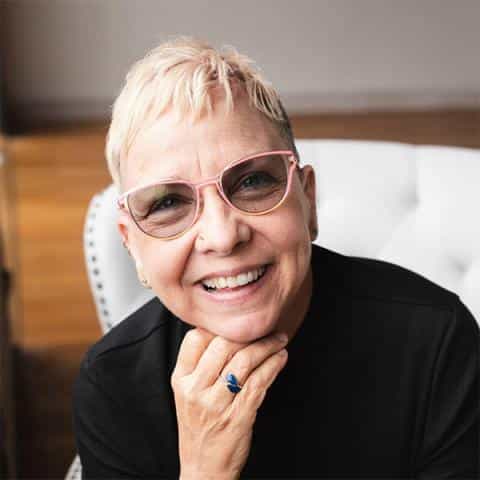
Annie L. Scholl is a North Carolina-based freelance writer who contributes to Daily Word® and Spirituality & Health®. Her work has been published on Huffington Post, Brevity, and The Sunlight Press. She recently finished her first memoir and blogs at anniescholl.com.

Free shipping on orders over $50
More
 Article
Bright Lights: Steven Nygren Builds Community, Connection, & Hope at Serenbe
Discover Serenbe, the walkable, nature-connected neighborhood outside Atlanta prioritizing health, sustainability, and meaningful relationships created by Steven Nygren.
 Article
Bright Lights: Naomi Westwater Honors Grief, Spirit, and Song Masculinity
Through music and ritual, Naomi Westwater honors ancestry and seasons, fostering connection and spiritual resilience.
 Article
Bright Lights: Riza Rasco Finds Meaning by Stepping Into the Unknown
Riza Rasco shares how she left a successful DuPont career to find deeper meaning through travel, spirituality, and community service.
 Article
Thriving in Uncertainty: The Sacred Pause
Embrace the sacred pause in uncertainty. Transform liminal spaces into spiritual growth with ancient wisdom and three mindful practices for deeper presence and wonder.