Jeremiah 31:1-6
At that time, says the LORD, I will be the God of all the families of Israel, and they shall be my people.
Thus says the LORD:
The people who survived the sword
found grace in the wilderness;
when Israel sought for rest,
the LORD appeared to him from far away.
I have loved you with an everlasting love;
therefore I have continued my faithfulness to you.
Again I will build you, and you shall be built,
O virgin Israel!
Again you shall take your tambourines,
and go forth in the dance of the merrymakers.
Again you shall plant vineyards
on the mountains of Samaria;
the planters shall plant,
and shall enjoy the fruit.
For there shall be a day when sentinels will call
in the hill country of Ephraim:
‘Come, let us go up to Zion,
to the LORD our God.’
Comment:
Jeremiah began his ministry in 627 BCE, when the northern (Israel) and southern (Judah) kingdoms were divided but still unconquered. The 'jeremiads' that constitute much of his book were warnings of imminent danger if the people did not return to their commitment to make the Lord their highest priority. In later writings he speaks with despair of the consequences of error thought, as first the northern and then the southern kingdoms are captured, and the Jews in Jerusalem led into captivity. Jeremiah himself ended up in Egypt, and his new message became that, while choices have consequences, those consequences are not eternal. He writes of—and speaks for—a divinity of infinite love. We can always make new choices, and those new choices can undo the damage of the past and create a new life experience of infinite joy. I think the heart of this beautiful passage is "I have loved you with an everlasting love." We are One with the divine even as we suffer the consequences of error choices, and that energy is always available to support us as we learn from past mistakes, make new and better choices, and continue on our creative path and purpose.
Blessings!
Rev. Ed
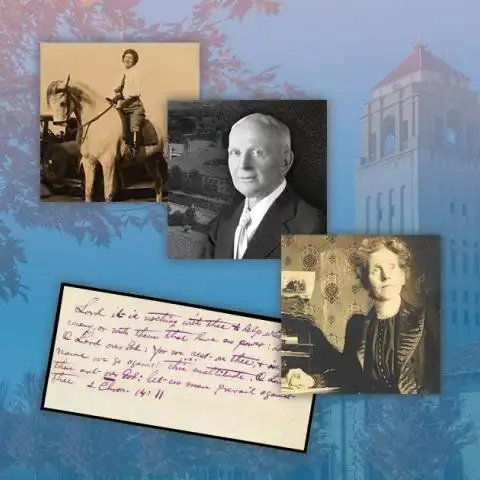
Explore the Rich History of Unity

Curious about the meaning of Bible verses?
More
 Bible Interpretation
Hosea 2:14-23
Therefore, I will now allure her, and bring her into the wilderness, and speak tenderly to her. From there I
 Bible Interpretation
Jeremiah 17:5-8
Thus says the Lord: Cursed are those who trust in mere mortals and make mere flesh their strength, whose hearts
 Bible Interpretation
Jeremiah 31:17
"There is hope for your future, says the Lord, and your children shall come back to their own country" (Jeremiah
 Bible Interpretation
Ezekiel 16
Comment:This chapter is much too long to print out here. It is a part of the prophet's work, written immediately