John 14:6; Romans 3:23-24; Romans 6:23; 2 Corinthians 5:15
Comment:
QUESTION: My friend is a divinity student at Liberty Baptist Theology and he says Unity is a cult and quoted these verses plus a few more to me. How do I respond? He has told his father, whom I am seeing, not to believe in anything Unity says. Thank you so much.
COMMENT: First of all, it's important to recognize that there may be no agreement possible here. Your friend's son has clearly made a religious choice and commitment—one that we can respect and admire even if we don't agree with all of its basic tenets. And the belief system he is embracing seems to be based on one specific, detailed interpretation of God and spiritual purpose—and a conviction that all other views are wrong. That does not allow for graceful, loving conversation. Jesus taught his disciples that it's important to recognize when someone is unwilling to hear the new message he was sharing, and to move on rather than expend energy needlessly. That said, there are certainly loving ways of understanding the four passages he cites as affirming of Unity's beliefs and teachings. (As for Unity being a cult, a “cult” by definition is shaped around, and dominated by, a single charismatic leader seen as being the only intermediary between God and the rest of us. This is the exact opposite of what Unity believes, which is that we each have our own personal, infinitely loving and powerful connection with God. We're about helping people learn how empowered they truly are—and you could hardly organize a cult around such a message of empowerment!) Here are some interpretations of the passages you cited that may help you find clarity; I'm not sure they will impress or change your friend—nor should they; his path is his own to follow. JOHN 14:6: "Jesus said to him, 'I am the way, and the truth, and the life. No one comes to the Father except through me.’" COMMENT: Properly understood, this is one of the most important and powerful of Jesus' teachings to his disciples in the farewell discourse and prayer that comprise Chapters 13:31 through 17:26 in the Gospel of John. When it is misunderstood, however, it can seem divisive and judgmental—two qualities that ought never be associated with the ministry of Jesus. In this final discourse, delivered on the eve of his arrest and trial, Jesus is speaking fully as the Christ -- the Presence of God innate in each and all of us. He has so fully succeeded in expressing his own Christ Power that it has become indistinguishable from his human identity. He is no longer Jesus of Nazareth, but Jesus Christ. He is assuring his disciples throughout the discourse that they can, and must, accomplish the same Oneness. It is as the Christ that he is speaking; and it is the Christ that he is describing as the only path to God. We may try to reach God by placing our idea of God somewhere in the heavens and then striving to reach that idea. It won't work. The path to rediscovering, reaffirming, re-expressing our Oneness with God lies within—by recognizing, believing and expressing our own Christ Nature. We must turn within and find the Christ—-because there is no other way to accomplish our spiritual purpose. To believe that Jesus was speaking of his mortal self, that he was claiming a unique power to decide who does and does not deserve entry into divine consciousness, is to misunderstand his entire ministry and message, and to ignore his most important teaching: The only path to God is through believing our Oneness with God and expressing the Love of God at every opportunity. ROMANS 3:23-24: "For there is no distinction, since all have sinned and fall short of the glory of God; they are now justified by his grace as a gift, through the redemption that is in Christ Jesus." This perfectly expresses our understanding of Jesus' purpose and message. We have all fallen short of the glory of God that is our true identity by forgetting our spiritual truth in the density of the human experience. Sin comes from the Greek word for “missing the mark,” and we do indeed miss the mark when we make choices based on our confused and limited human minds and appetites instead of calling upon the Christ within. Jesus perfectly demonstrated the possibility of redemption by perfectly expressing his Christ nature—and calling us to do the same. ROMANS 6:23: "For the wages of sin is death, but the free gift of God is eternal life in Christ Jesus our Lord." Absolutely. The system of error thought we call sin results in an experience of fear and limitation that culminates in the experience of death. Our true nature—the Christ of our being—is eternal and undying. When we believe that and follow the example of Jesus Christ, we will experience our eternal free nature instead of being confined within limited human delusions. 2 CORINTHIANS 5:15: "And he died for all, so that those who live might live no longer for themselves, but for him who died and was raised for them." We understand the example and significance of the final demonstration of Jesus' human ministry in a somewhat different way than Paul did, but we give it absolutely as much importance as he did. Jesus didn't “die for all.” Jesus didn't die. He moved through the death experience to teach us, and demonstrate convincingly, that 'death' has no reality in spiritual truth. We don't believe he 'was raised' by a Power outside himself. We believe he raised himself by embracing and expressing his true Christ nature. And yes, he did it for us—to encourage us to overcome our own belief in death, which is such a strong impediment to our spiritual path. Blessings!
Rev. Ed
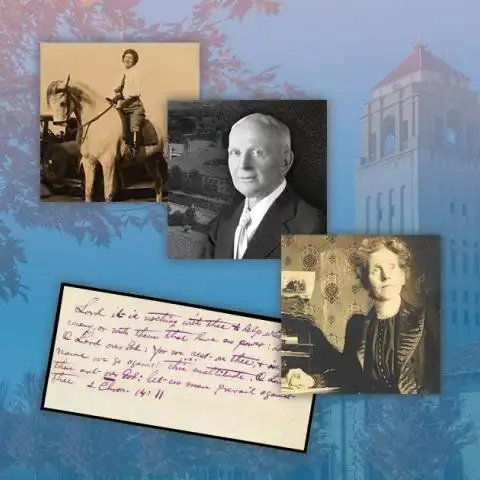
Explore the Rich History of Unity

Curious about the meaning of Bible verses?
More
 Bible Interpretation
John 14:6 "Jesus said to him, 'I am the way, and the truth, and the life. No one comes..."
"Jesus said to him, 'I am the way, and the truth, and the life. No one comes to the Father
 Bible Interpretation
John 14:6 "Jesus said to him, 'I am the way, and the truth, and the life. No one comes..."
"Jesus said to him, 'I am the way, and the truth, and the life. No one comes to the Father
2 Corinthians 5:15
"And he died for all, that those who live might live no longer for themselves but for him who for
 Bible Interpretation
John 14:5-6 "Thomas said to him, 'Lord, we do not know where you are going...'"
"Thomas said to him, 'Lord, we do not know where you are going. How can we know the way?' Jesus