John 17:1-3 "Father, the hour has come; glorify thy Son that the Son may glorify thee..."
Comment:
Dear Friend,
You have asked about one particular sentence from the great final discourse (John 13-17) in which Jesus is speaking to his closest disciples in the time between the Last Supper and his arrest in the Garden of Gethsemane. He closes his discourse with a prayer for his disciples, that they may be supported and strengthened through the trying times to come. The prayer begins with these words (John 17:1-3): "Father, the hour has come; glorify thy Son that the Son may glorify thee; since thou hast given him power over all flesh, to give eternal life to all whom thou hast given him. And this is eternal life, that they may know thee the only true God, and Jesus Christ whom thou hast sent." Metaphysically, we understand the Son to be the Christ—the creative Presence and Power of God that is the true identity of each of us. Through the final demonstrations of his mortal life, Jesus intends to demonstrate the Power of the Christ to overcome every apparent obstacle to its full expression—even the obstacle of death. He does this, not to establish himself as a unique being, but to call us, and challenge us, to find and express the same Christ Power within ourselves as well. The Christ is “glorified” as a full expression of God, and the Christ “glorifies” its Source by manifesting into our human experience, bringing more of the infinite Light and Love of God into expression. Eternal life—life as a divine power, free from any possible limitation of sickness or death—can only be experienced when we recognize the Christ energy that Jesus demonstrates, claim it for ourselves, and know ourselves to be full expressions of the true God that is the One Presence and One Power of our lives, and of all the universe.
Blessings!
Rev. Ed
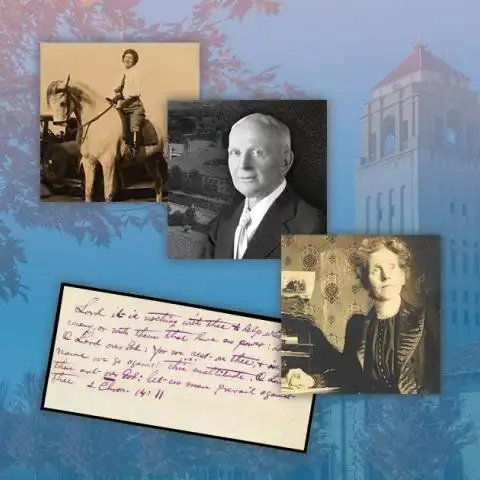
Explore the Rich History of Unity

Curious about the meaning of Bible verses?
More
 Bible Interpretation
John 14:18 "I will not leave you desolate; I will come to you."
Comment:Dear Friend,In order to properly appreciate the verse you mention—John 14:18—I think it’s necessary to add the subsequent two verses
 Bible Interpretation
John 15:7 "If you abide in me, and my words abide in you, ask for whatever you wish..."
"If you abide in me, and my words abide in you, ask for whatever you wish, and it will be
John 17:1-5 "After Jesus had spoken these words, he looked up to the heaven..."
"After Jesus had spoken these words, he looked up to heaven and said, 'Father, the hour has come; glorify your
 Bible Interpretation
John 14:3 "And when I go and prepare a place for you, I will come again..."
Comment:Dear Friend,As with your previous question, you are asking about a portion of Jesus' great final discourse in the Gospel