Luke 18:1-9 "Then Jesus told them a parable about their need to pray always..."
"Then Jesus told them a parable about their need to pray always and not to lose heart. He said, 'In a certain city there was a judge who neither feared God nor had respect for people. In that city there was a widow who kept coming to him and saying, 'Grant me justice against my opponent.' For a while he refused; but later he said to himself, 'Though I have no fear of God and no respect for anyone, yet because the widow keeps bothering me, I will grant her justice, so that she may not wear me out by continually coming.' And the Lord said, 'Listen to what the unjust judge says. And will not God grant justice to his chosen ones who cry to him day and night? Will he delay long in helping them? I tell you, he will quickly grant justice to them. And yet, when the Son of Man comes, will he find faith on earth?'" (Luke 18:1-9).
Question:
I'd like to gain from a practical application of the lessons in my life, that are available from the widow and from the judge. Thank you.
Comment:
It's interesting that the author of this Gospel felt it necessary to preface this particular parable by carefully setting out its meaning—probably because the story itself is fairly confusing. Is Jesus comparing God to an unjust judge? Is he suggesting that persistent whining is the best way to get God's attention and get our perceived needs met? Really? Given everything Jesus teaches us throughout his ministry about God—and about ourselves—clearly something else is at work here. Perhaps whoever passed the story on to Luke misunderstood what Jesus was saying. Perhaps the details got warped through years of oral tradition. But there it is in the Bible, so we need to look closer. Jesus was a master, not just of straightforward teaching and brilliant use of parables, but of many different styles of discourse. He could make jokes—'take the beam out of your own eye before you try to help your brother get a splinter out of his' is a pretty funny image. He could be sarcastic; he could exaggerate wildly, as in the image of a camel trying to get through the eye of a needle. He was gifted at expressing his spiritual message in terms that his particular listeners could easily grasp. Here I think he's using a kind of dramatic inversion. Is constant, repetitive, nagging prayer the only way to reach God? Certainly not, Jesus is saying. That kind of approach may be necessary if you're dealing with a self-centered, disinterested, unjust judge. But God is a God of infinite Love, eager to support us as we move through this human experience to accomplish our spiritual purpose. It's a question of consciousness, I think. If we pray from a consciousness of lack and need, and a dualistic sense of being beset by "opponents," then we are creating in our lives expressions of that same negative energy. What's needed is "faith"—not simply faith in God, but faith in God as Love, faith that dualistic challenges are self-made illusions and love is our spiritual reality. So the important question is, "When the Son of Man comes"—that is, when we awaken to our true identity as unique expressions of the Christ—"will he find faith on earth?” There is no power opposed to us, and there is no Power denying us our good—unless we choose to believe there is. "According to your faith be it done to you." The choice is ours. Blessings!
Rev. Ed
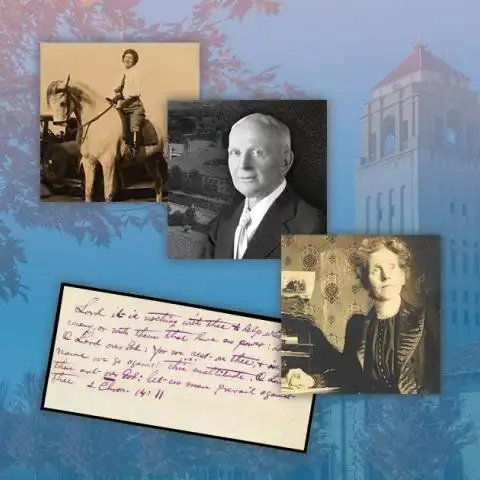
Explore the Rich History of Unity

Curious about the meaning of Bible verses?
More
 Bible Interpretation
Luke 18:2-8 "He said, 'In a certain city there was a judge who neither feared God..."
"He said, 'In a certain city there was a judge who neither feared God nor had respect for people. In
 Bible Interpretation
Matthew 8:28-34
"When he came to the other side, to the country of the Gadarenes, two demoniacs coming out of the tombs
 Bible Interpretation
Luke 16:1-8 "Then Jesus said to the disciples, 'There was a rich man who had a manager...'"
“Then Jesus said to the disciples, ‘There was a rich man who had a manager, and charges were brought to
 Bible Interpretation
Job 42 "Then Job answered the Lord: 'I know that you can do all things...'"
Job 42 ”Then Job answered the Lord: 2‘I know that you can do all things, and that no purpose of