Sirach 30:21-25
"Do not give yourself over to sorrow, and do not afflict yourself deliberately. Gladness of heart is the life of man, and the rejoicing of a man is length of days. Delight your soul and comfort your heart, and remove sorrow far from you, for sorrow has destroyed many and there is no profit in it. Jealousy and anger shorten life, and anxiety brings on old age too soon. A man of cheerful and good heart will give heed to the food he eats" (Sirach 30:21-25).
Question:
I was given this to read by my priest.
Comment:
I think your priest must be both wise and well-read. Relatively few people are aware of the rich lessons available in Sirach, and other books included in the Apocrypha, writings not included in the 'official' Bible but recognized as spiritually significant. Sirach was a Jewish teacher of wisdom about 180 BCE. This powerful passage is a metaphysical reminder that, contrary to some beliefs, we are not here in this human experience to suffer, hoping for redemption sometime in the future. "Gladness of heart" is the essential attitude that will allow us to make the choices that bring a new dimension of consciousness into manifestation through us. Certainly, it is not suggested that we will not experience challenges—sometimes severe. Pain and sadness are an essential part of our spiritual journey. But 'sorrow' is more than sadness. It's a lingering on sadness. "A man of cheerful and good heart" will face challenges, and feel sadness, without believing in those negative energies as real, and seeing them as something to be endured. A good-hearted man (or woman, of course) feels the pain and sadness and then looks for the guidance that will allow him/her to make the choices that will lead out of the negative and into the positive.
Blessings!
Rev. Ed
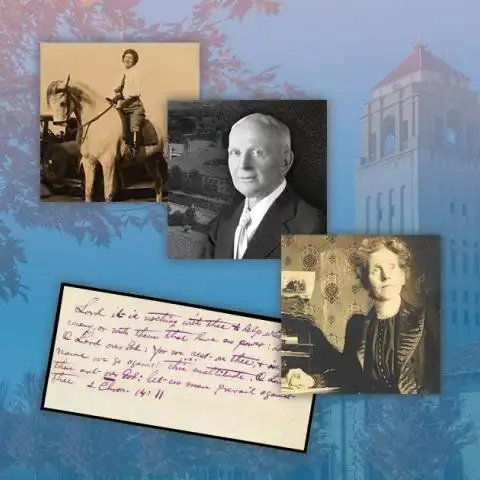
Explore the Rich History of Unity

Curious about the meaning of Bible verses?
More
 Bible Interpretation
Luke 11:34
“Your eye is the lamp of your body. If your eye is healthy, your whole body is full of light
1 Corinthians 14:1-2
“Pursue love and strive for the spiritual gifts, and especially that you may prophesy. For those who speak in a
 Bible Interpretation
Proverbs 28:25
"A greedy man stirs up strife, but he who trusts in the Lord will be enriched" (Proverbs 28:25 RSV).Comment:I don't
 Bible Interpretation
Luke 22:17-19
“Then he took a cup, and after giving thanks he said, ‘Take this and divide it among yourselves; for I