Sorcery
Question:
How does Unity metaphysically interpret the word sorcery? Channeling is present in today’s vocabulary. Are they the same? There is admonition against "sorcery" in the Bible. I have done some Hebrew and Greek study with Strong's Concordance but still don't have an answer. Please advise. Thank you!
Comment:
You cite several passages from Revelations (9:21, 21:8, 22:15) to support the Bible's condemnation of 'sorcery,' and you could have quoted many other passages besides. Probably the most notorious biblical “sorcerer” was the Witch of Endor, whom Saul commands to summon the ghost of Samuel. (Ironically, Saul had earlier driven sorcerers and necromancers out of Israel). In 1 Samuel 28 Saul's ghost does indeed appear, but only to condemn Saul for calling him, and to predict that the king, his forces and his sons will be defeated. In the new Testament it's worth noting that the Pharisees accused Jesus of sorcery, claiming that his healings came from his pact with the devil. The consistent theme throughout both testaments, I think, relates directly to the First Commandment. "I am the Lord your God ... You shall have no other gods before me." Any time we turn to other sources of power other than our relationship to the divine, we are creating a dualistic drama that will not end well. In turning to someone else's perceived “power” we are demonstrating a lack of faith in our own intimate, personal relationship to the Lord of our being. That lack of faith assumes the creative power of our intention, and becomes our life experience. Sorcery keeps us from the kingdom of heaven described in Revelation 21 and 22 because it distracts us into a false belief in a power other than God. The point is that we are to trust our own direct relationship to God—not to abandon that relationship because it's easier to believe in another power outside our control. Blessings!
Rev. Ed
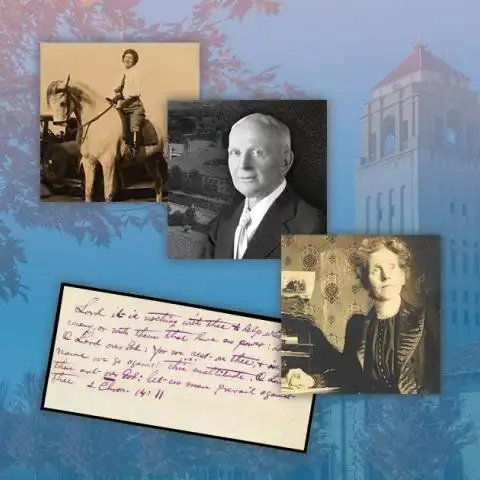
Explore the Rich History of Unity

Curious about the meaning of Bible verses?
More
 Bible Interpretation
Revelation (John 22:15) 22:15
"Outside are the dogs and sorcerers and fornicators and murderers and idolators, and everyone who loves and practices falsehood" (Revelation
 Bible Interpretation
1 Samuel 28
Comment:I am not going to copy out the entire chapter, since it is quite long. It’s also a bit confusing
 Bible Interpretation
1 Samuel 13:7-15 "Some Hebrews crossed the Jordan to the land of Gad and Gilead..."
“Some Hebrews crossed the Jordan to the land of Gad and Gilead. Saul was still at Gilgal, and all the
 Bible Interpretation
1 Samuel 28:13 "The king said to her, 'Have no fear; what do you see?'..."
The king said to her, “Have no fear; what do you see?” The woman said to Saul, “I see a