Genesis 3 and Matthew 25
"The woman said to the serpent, 'We may eat of the fruit of the trees in the garden; but God said, 'You shall not eat of the fruit of the tree that is in the middle of the garden, nor shall you touch it, or you shall die.'" But the serpent said to the woman, 'You will not die; for God knows that when you eat of it your eyes will be opened, and you will be like God, knowing good and evil.' So when the woman saw that the tree was good for food, and that it was a delight to the eyes, and that the tree was to be desired to make one wise, she took of its fruit and ate; and she also gave some to her husband, who was with her, and he ate. Then the eyes of both were opened, and they knew that they were naked; and they sewed fig leaves together and made loincloths for themselves. They heard the sound of the Lord God walking in the garden at the time of the evening breeze, and the man and his wife hid themselves from the presence of the Lord God among the trees of the garden. But the Lord God called to the man, and said to him, 'Where are you?' He said, 'I heard the sound of you in the garden, and I was afraid, because I was naked; and I hid myself.' He said, 'Who told you that you were naked? Have you eaten from the tree of which I commanded you not to eat?' The man said, 'The woman whom you gave to be with me, she gave me fruit from the tree, and I ate.' Then the Lord God said to the woman, 'What is this that you have done?' The woman said, 'The serpent tricked me, and I ate.'" (Genesis 3:2-13).
Comment:
Genesis:3:2-13: There is a lot that can be said about this central passage describing the so-called 'original sin.' Certainly, we have here the first biblical example of 'passing the buck,' as Adam blames Eve and Eve blames the serpent. The point is this: It's all God. The tree, Adam, Eve, the serpent—all divine creations, all part of the infinite spiritual Energy of God that is the only reality there is. We've always been taught that all of human life is a punishment for this sin of disobedience, but metaphysically, a very different dynamic appears. God intends us to move into a dualistic life experience, to learn how to lovingly exercise the infinite creative power we share with the Allness of God. But it has to be our choice. How better to get us to make that choice than to plant a beautiful tree in the very center of the garden, forbid us to eat of its fruit, then send in a serpent to persuade us to do just that! There are consequences to our choice, but they are not so much punishment as the inevitable result of a dualistic mindset. And we are never 'away' from God—indeed, if God is Omnipresence, where could we be that God is not?
Matthew 25:14-30: This familiar story tells of the wealthy man who, before leaving on a long journey, entrusted some of his wealth to three servants: five talents to one, two to another, one to the third—"to each according to his ability." (A talent was a huge amount of money—about 15 years' wages for a laborer.) On his return, both of the first two servants had invested the talents given them, and each returned a profit and was rewarded by the master. The third, however, was afraid of losing the talent he'd been given, so he hid it safely away and returned it to his master. His talent is taken from him and given to the one with 10 talents—"For to all those who have, more will be given, and they will have an abundance; but from those who have nothing, even what they have will be taken away."
On the surface, it may sound like an uncomfortable story about greed. But metaphysically, Jesus is offering an important teaching about our own relationship to God. The third servant lived in fear of his Source and believed the best he could hope to do was to avoid making mistakes by hiding the talent and returning it untouched. There are still many people who believe in this understanding of God as a Power to be feared. But we are endowed with innate talents precisely so that we can invest them, use them, and produce greater good. We're here in this human experience to be creative, not merely to be obedient out of fear. If we are afraid to risk because we're afraid to lose, what we are creating is a consciousness of fear. And the result will inevitably be that, as Job discovers, "that which I greatly fear has come upon me." If we place our belief in a fear of loss, then loss is what we create. If, on the other hand, we accept the talents as a gift, and a rich opportunity—if we lovingly invest our gifts and energies to bring more of God's abundance into expression, then we will be richly rewarded as a result. It's not a question of judgment—it's all about consciousness. Choices have consequences.
Blessings!
Rev. Ed
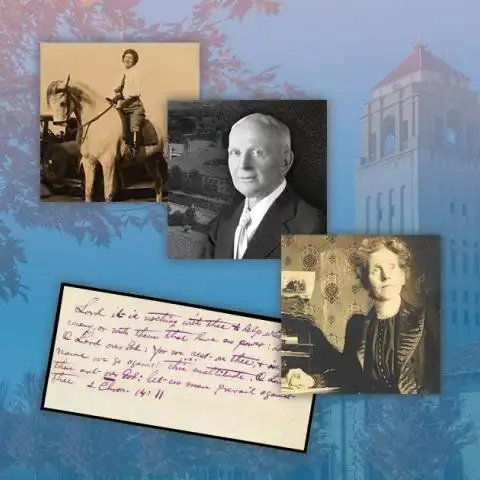
Explore the Rich History of Unity

Curious about the meaning of Bible verses?
Más como este
 Bible Interpretation
Genesis 3:2-13 "The woman said to the serpent, 'We may eat of the fruit of the trees..."
"The woman said to the serpent, 'We may eat of the fruit of the trees in the garden; but God
 Bible Interpretation
Matthew 25:14-15, 19-21
"For it will be as when a man going on a journey called his servants and entrusted to them his
Matthew 25:14-30 The Story of the Talents
Question:Jesus' story of the talents (Mt. 25:14-30). This story baffles me. It seems to encourage greed. Please help me interpret
 Bible Interpretation
Matthew 25:14-30
"For it is as if a man, going on a journey, summoned his slaves and entrusted his property to them