Luke 22:17-19
“Then he took a cup, and after giving thanks he said, ‘Take this and divide it among yourselves; for I tell you that from now on I will not drink of the fruit of the vine until the kingdom of God comes.’ Then he took a loaf of bread, and when he had given thanks, he broke it and gave it to them, saying, ‘This is my body, which is given for you. Do this in remembrance of me’” (Luke 22:17-19).
Question:
I was raised in a liturgical environment where Eucharist is offered and encouraged daily, with emphasis on Sunday. I was never truly onboard with what I had been told and have been researching interpretations for the past couple of years. Still discerning ...
Comment:
In establishing the ritual of communion with his disciples just before his arrest, Jesus was adding a new dimension of spiritual understanding to the already-existing ritual of Passover in the Hebrew faith. There is a certain amount of ambivalence within Unity about communion, so I can’t speak for anyone but myself. To some, it is rooted in an old belief about our relationship to the divine, and so not appropriate to the new awareness that Jesus Christ taught and embodied. Others are fine with the metaphysical idea but do not feel the physical elements—the bread and the wine—are necessary.
And that’s true, of course. Nothing in the physical realm is ‘necesssary’ for our spiritual growth. But it can certainly be helpful. I offer a communion service, with the elements, at least twice a year—at Thanksgiving and during Holy Week—to embody and anchor our newfound realization that we are meant to be the channels through which the creative energy of the Divine expresses into the world. To Charles Fillmore, the bread and wine represent the substance and energy, respectively, of the Divine. By sharing the elements in an energy of spiritual community, we are individually and collectively committing ourselves to maintaining our spiritual purpose as our highest priority. I’ve actually found it most meaningful to make communion a part of our Easter service, rather than in its traditional place before Good Friday. The deep spiritual awareness and commitment it represents seems to fit best with the celebration of our ultimate triumph over all human limitations.
Blessings!
Rev. Ed
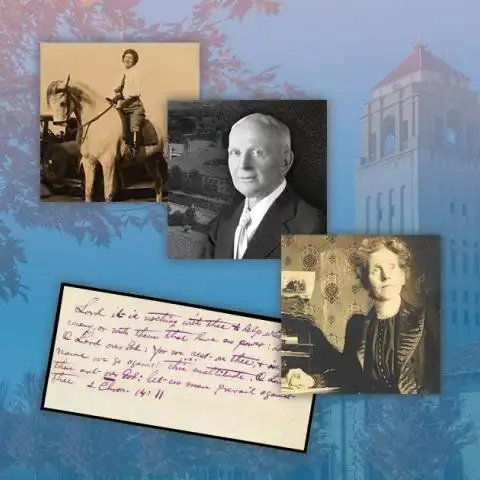
Explore the Rich History of Unity

Curious about the meaning of Bible verses?
Más como este
 Bible Interpretation
Luke 11:34
“Your eye is the lamp of your body. If your eye is healthy, your whole body is full of light
 Bible Interpretation
1 Corinthians 14:1-2
“Pursue love and strive for the spiritual gifts, and especially that you may prophesy. For those who speak in a
John 11:1-4
“Now a certain man was ill, Lazarus of Bethany, the village of Mary and her sister Martha. Mary was the
Leviticus 18:22 and Romans 1:27
LEVITICUS 18:22: “You shall not lie with a male as with a woman; it is an abomination.” ROMANS 1:26-27: “For