The Spirituality of Mastery
I am a brain surgeon. When someone is about to undergo a cranial operation, they are not comforted by knowing their surgeon is competent. Competence is assumed. What they long for—often without having language for it—is mastery. Not brilliance. Not confidence. Mastery. The kind that has been earned slowly, patiently, through years of disciplined practice and hard humility. For the patient, mastery is hope embodied. For the surgeon, mastery is not merely a technical achievement. It is a spiritual state.
Likewise, I am a faculty member in a surgical training program. We do not educate residents with the goal of turning out proficient surgeons. Proficiency is not enough. Our aspiration is far more demanding: We expect our trainees to become masters by the end of their training. Ever ascending.
A surgical colleague of mine, Roger Kneebone, Ph.D., of Imperial College London, explored this very journey in his remarkable book Expert: Understanding the Path to Mastery. In it, Kneebone examines how professionals across many disciplines progress through the traditional stages of apprentice, journeyman, and finally expert. He begins, naturally, with surgery but extends his inquiry to master tailors, musical instrument makers, and even taxidermists to see how expertise demands acquiring precision, patience, and devotion.
Kneebone suggests that what distinguishes a master is first their profoundly different relationship to mistakes—they do not make them in the ordinary sense. Complications arise that may prove beyond our current capacity to solve but never beyond our capacity to anticipate. Second, the master feels a deep obligation to pass on their knowledge through apprenticeship. Mastery, in this view, is never private property. It is a lineage.
As I read and reflected on his work, I found myself increasingly drawn to a dimension he touched only indirectly: the spirituality of mastery.
The Climb Begins
Early on the path, mastery is forged through hardship, endless repetition, long hours, and monotony that tests resolve. It is during this phase that professional identity begins to form. Apprentices gradually align themselves with a particular master, and in doing so adopt not only technique, but also values, posture, and ways of seeing.
There is something real to be said for the much-discussed “10,000-hour rule,” popularized by writer Malcolm Gladwell. Whether one is performing surgery or building guitars, those thousands of hours matter. Repetition slowly thins the ego. The mind becomes absorbed in technical detail and in the quality of the finished work. Pride gives way to precision.
The tools of the trade—whether scalpel blade, piano keys, rifle bolt, or hammer and chisel—become second nature to the evolving apprentice. At this level of what we often call “muscle memory,” the apprentice develops an intimate, almost subconscious relationship with their instruments. The brain is freed from the burden of constant technical correction and can begin to engage deeper questions of theory, judgment, and creativity.
The rules of a profession must be learned completely before they can be broken. One of my own mentors used to remind me of this whenever he allowed me to begin or close a surgical case. His instruction was simple and firm: “Don’t get creative.” What he meant was not to suppress imagination, but to acknowledge that I had not yet earned the right to it. My technique still required refinement. Creativity without mastery is recklessness.
This is one of the great distinctions between those who practice a craft and those who have mastered it. The master’s technique is so fully integrated into their being that creativity becomes safe—indeed, necessary. Thought and action are no longer separate. To repeat: The hallmark of mastery lies in a profoundly different relationship to mistakes. When an apprentice errs, the mistake reflects upon the master. As the apprentice becomes proficient, mistakes still occur—but they arise from imperfect execution. The master, however, views the work from an entirely different altitude. They see not only the technical steps but also the underlying mechanical and theoretical realities.
I often tell my neurosurgical residents: There is no such thing as a mistake for a master surgeon. There are only expected complications and anticipated risks. The master avoids these complications through impeccable technique, but because surgery always contains uncertainty, the master has prepared for every foreseeable outcome—every one, including mistakes of the residents. When a complication arises, it does not surprise the master. It unfolds within a mental landscape already mapped out. The response is calm, appropriate, and effective—not because the master is fearless, but because he or she is prepared.
At this level, something else happens. The master craftsman no longer feels the need to boast. The work speaks for itself. Ego detaches from acclaim. The reward lies not in applause, but in the quiet satisfaction of alignment, of having done the work as well as it could be done.
Control gives way to attunement. The master listens to the material—to the tissue, the wood, the instrument—its limitations and possibilities, and the context in which it must serve its purpose. Power no longer comes from force but from cooperation with reality itself.
Achieving Humility
True masters are humbled by a sobering recognition of how vast the field of knowledge truly is and how incomplete their own understanding will always remain. This gives rise to a paradox: The more one masters, the less significant it seems. For this reason, spiritual traditions so often associate mastery with silence, restraint, and gentleness. Mastery is not ecstatic transcendence. It emerges from devotion to practice. Awakening, in this sense, occurs through fidelity to the ordinary.
Mastery also reorients one’s relationship to time. The master is rarely hurried, even when operating under pressure. Speed gives way to timing. Urgency dissolves into discernment.
The master understands that mastery has no finish line. Bodies age. Conditions change. Skills evolve and ultimately fade. Mastery becomes not a conquest of impermanence, but a way of living honestly within it.
At its highest expression, mastery becomes ethical. It begins to ask deeper questions:
Should this be done?
For whom?
At what cost?
Spiritual maturity emerges when skill is governed not by capability alone, but by responsibility. In short, mastery is spiritually significant not because it makes one exceptional, but because—when pursued honestly—it erodes illusion: the illusion of control, permanence, supremacy, and self-importance.
A peculiar irony of mastery in the 21st century is that technology has amplified the voices of self-proclaimed experts. We are surrounded by “influencers” whose singular authority derives from harnessing the most recent tool for attracting attention. Wisdom is measured by the reach of the content rather than its depth. This mirror of attention shapes the apprentice, the journeyman, and the expert influencer—until, for whatever reason, it evaporates.
And yet real mastery remains unchanged. We often speak of “mastering one’s emotions,” but for the true master this is almost a non sequitur. Emotional control emerges naturally when attention is fully given to the task itself. The work becomes all-consuming; ego recedes.
A surgeon must regulate emotion to stop catastrophic bleeding.
A pilot must do the same while diagnosing a failing aircraft.
A Secret Service agent must master fear in order to place his or her body between danger and another human life.
In each case, emotion is not denied—it is subordinated to purpose. By learning to become masters, these individuals do not suppress their humanity. They refine it. They gain sovereignty over their inner world so that it does not interfere with the technical expertise that has risen to the level of spiritual practice.
This article appeared in the July/August 2026 issue of Spirituality & Health: A Unity Publication®. Subscribe now.

About the Author
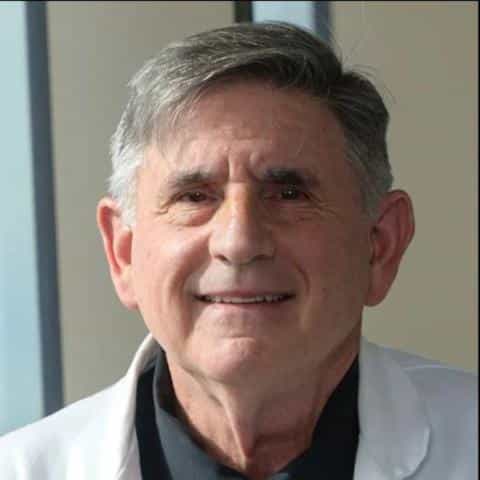
Allan Hamilton, M.D., is a Harvard-trained brain surgeon, Regents Professor of Surgery at the University of Arizona, motivational speaker, and senior script consultant for the hit television drama Grey’s Anatomy. He is the author of several books, the latest of which, Cerebral Entanglements: How the Brain Shapes Our Public and Private Lives, is due to be published in early 2025.


More
 Article
Our Widely Distributed Intelligence
From MIT’s Cog and Kismet to a friendly robot at CES, discover how embodied intelligence challenges our notions of soul, consciousness, and human connection.
 Article
One World, One Heart: Finding Solace in Senseless Loss
Navigate tragedy with hope. Transform pain through divine love, and explore articles, booklets, and other resources.
 Article
Prosperity Resources
Explore Unity prosperity teachings with articles, meditations, booklets, and books. Unlock spiritual and practical tools for an abundant life.
 Article
Ancient Health Secrets
Unlock holistic health insights from ancient traditions. Dive into age-old practices that blend diet, spirituality, and stress management for vibrant living.