Deuteronomy 1:11-20 "May the Lord, the God of your ancestors, increase you a thousand times more..."
“May the Lord, the God of your ancestors, increase you a thousand times more and bless you, as he has promised you! But how can I bear the heavy burden of your disputes all by myself? Choose for each of your tribes individuals who are wise, discerning, and reputable to be your leaders.” You answered me, “The plan you have proposed is a good one.” So I took the leaders of your tribes, wise and reputable individuals, and installed them as leaders over you, commanders of thousands, commanders of hundreds, commanders of fifties, commanders of tens, and officials, throughout your tribes. I charged your judges at that time: “Give the members of your community a fair hearing, and judge rightly between one person and another, whether citizen or resident alien. You must not be partial in judging: hear out the small and the great alike; you shall not be intimidated by anyone, for the judgment is God’s. Any case that is too hard for you, bring to me, and I will hear it.” So I charged you at that time with all the things that you should do.
Then, just as the Lord our God had ordered us, we set out from Horeb and went through all that great and terrible wilderness that you saw, on the way to the hill country of the Amorites, until we reached Kadesh-barnea. I said to you, “You have reached the hill country of the Amorites, which the Lord our God is giving us.” (Deuteronomy 1:11-20)
Comment:
The Book of Deuteronomy is structured as a series of three talks delivered to the Hebrew people by Moses, in which he reviews and sometimes reinterprets the events of their journey from Egypt to their own land. These events were already covered in the preceding books, but the author (who was not actually Moses, but a much later writer known only as the Deuteronomist) has his own slant, based largely on questions of politics and logistics that would have been foreign to the nomadic Hebrews who first crossed the Jordan. In this passage the author is concerned with the establishment of a legal system previously described in Numbers (11:14-17) and Exodus (18:13-27). Up to this point all disputes and conflicts had been brought directly to Moses as the leader of the tribe; but this had become untenable, and a more practical system had to be devised. There’s a practical lesson for us here as well, I think. As we choose to follow our own spiritual guidance—the Christ Presence that is our true identity—we also have human issues to deal with. As Unity minister Jim Rosemergy wrote, “Even Mystics Have Bills to Pay.” Many of those choices and responsibilities can be handled without taking each individually to our internal Source, so long as that Source is always our final arbiter and guide. A bit of practical structure in our lives isn’t necessarily a threat to our spiritual awareness; it can, indeed, help us move forward on our path more efficiently. Blessings!
Rev. Ed
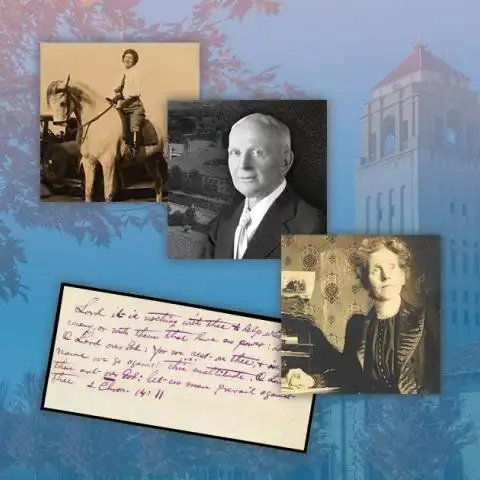
Explore the Rich History of Unity

Curious about the meaning of Bible verses?
More
 Bible Interpretation
Deuteronomy 20:16-18
"But as for the towns of these peoples that the Lord your God is giving you as an inheritance, you
 Bible Interpretation
Deuteronomy 28:8-11 "The Lord will command the blessing upon you in your barns..."
"The Lord will command the blessing upon you in your barns, and in all that you undertake, and he will
 Bible Interpretation
Deuteronomy 33:25
"Your bars are iron and bronze; and as your days, so is your strength" (Deuteronomy 33:25).Comment:The Book of Deuteronomy is
 Bible Interpretation
Deuteronomy 31:6
"Be strong and of good courage, do not fear or be in dread of them: for it is the Lord